
In consonance with the essence of the New Education Policy, our education governance needs major reforms in order to align itself with the needs of the 21st century. Bulk of this responsibility lies with state governments since they are deeply connected with the educational realities that shape learning outcomes on ground. The case of Bihar presents an opportunity to test these propositions as it is a state having a substantial share of India’s school going population, having resource constraints and visible socio-economic vulnerabilities.
In line with this, it is the state government, local government, and local institutions of Bihar that have a substantial capacity to streamline educational delivery and outcomes in line with 21st century goals, specifically the New Education Policy.
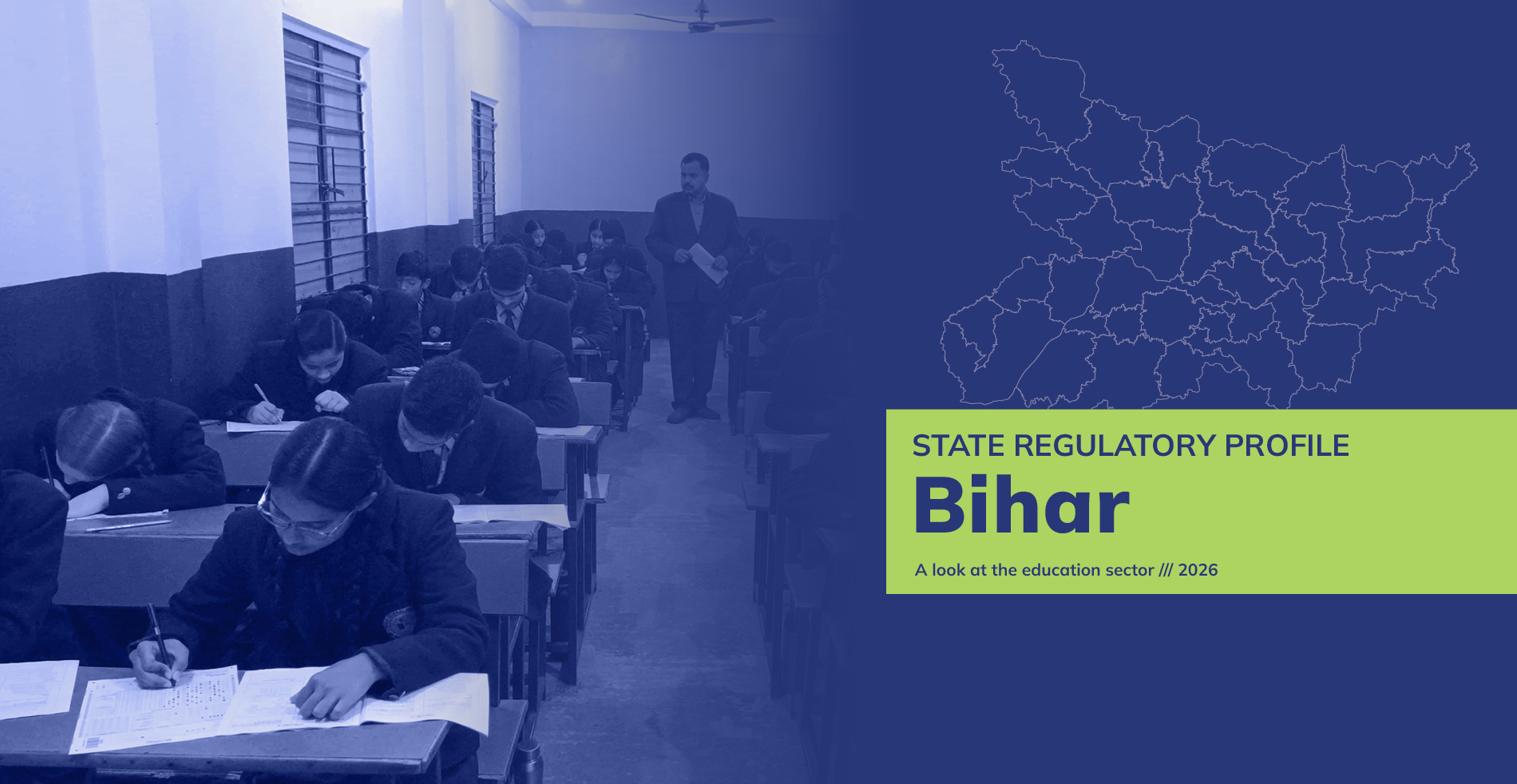
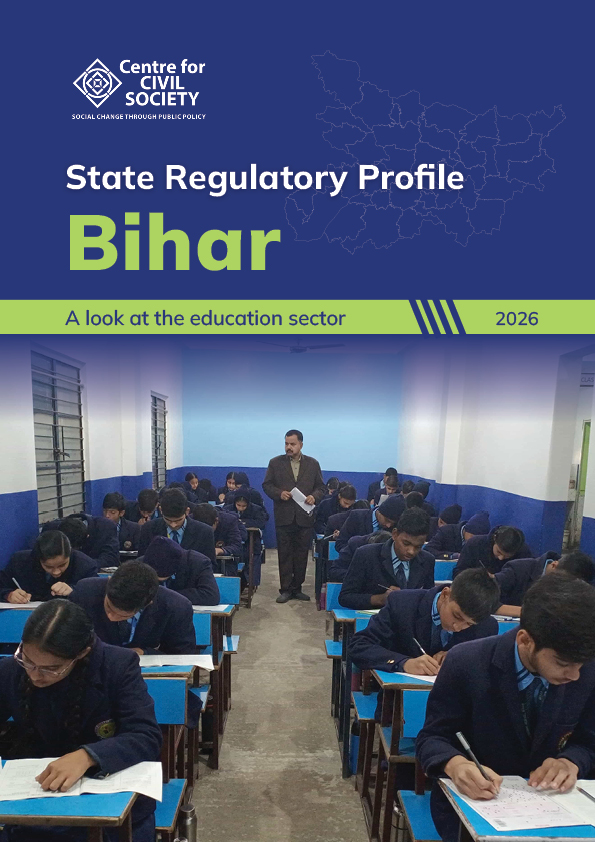
This report examined the state of education in Bihar, building on its historical landscape surrounding education and present status. It also identified major laws, key institutions, and policies governing education in the state, with a focus on how the educational laws in Bihar are experienced in practice. Based on the research, the study finds that Bihar’s educational framework is markedly dense yet fragmented with a greater emphasis on input-based regulation and a limited focus on learning outcomes and institutional accountability.
Most importantly, the framework is found to be patchy with foundations being led by the Bihar Education Code, and other laws satisfying ad-hoc executive focus. The dispersion of roles and responsibilities for executive authorities is unclear with a lot of overlaps in the legal mandates. This results in duplication of oversight increasing 1) compliance burden of schools 2) inefficiency in the overall administration, weakening effectiveness of the educational governance. The study also finds a lack of mechanism to govern institutional or executive accountability. As a result, the responsibility that comes with authority is diluted at many levels.
These issues weaken overall educational governance, creating problems in educational delivery and the resultant learning outcomes. The report recommends establishing the State Schools Standards Authority (SSSA) as a way to bridge these gaps and introduce greater efficiency in the system. The institution can act as an independent authority, which helps consolidate fragmented regulations, clarify accountability, reduce discretionary overreach, providing a much-needed assistance to streamline the regulatory framework with the aspirations of the New Education Policy. All this could be done while being sensitive to Bihar’s socio-cultural and administrative context.
Thus, for the purpose of driving meaningful institutional consolidation, setting up a SSSA is very necessary. Without it, education reforms may remain procedural, as opposed to transformational and in line with the aspirations of the New Education Policy.